
Program 01 · Lead commercialization
Control sooner.
Protect the operation.
CO₂-infused water systems under development for cooling, suppression, exposure protection and reignition control.
Illustrative training environment. Independent validation and protocol development continue.Plan a field evaluation →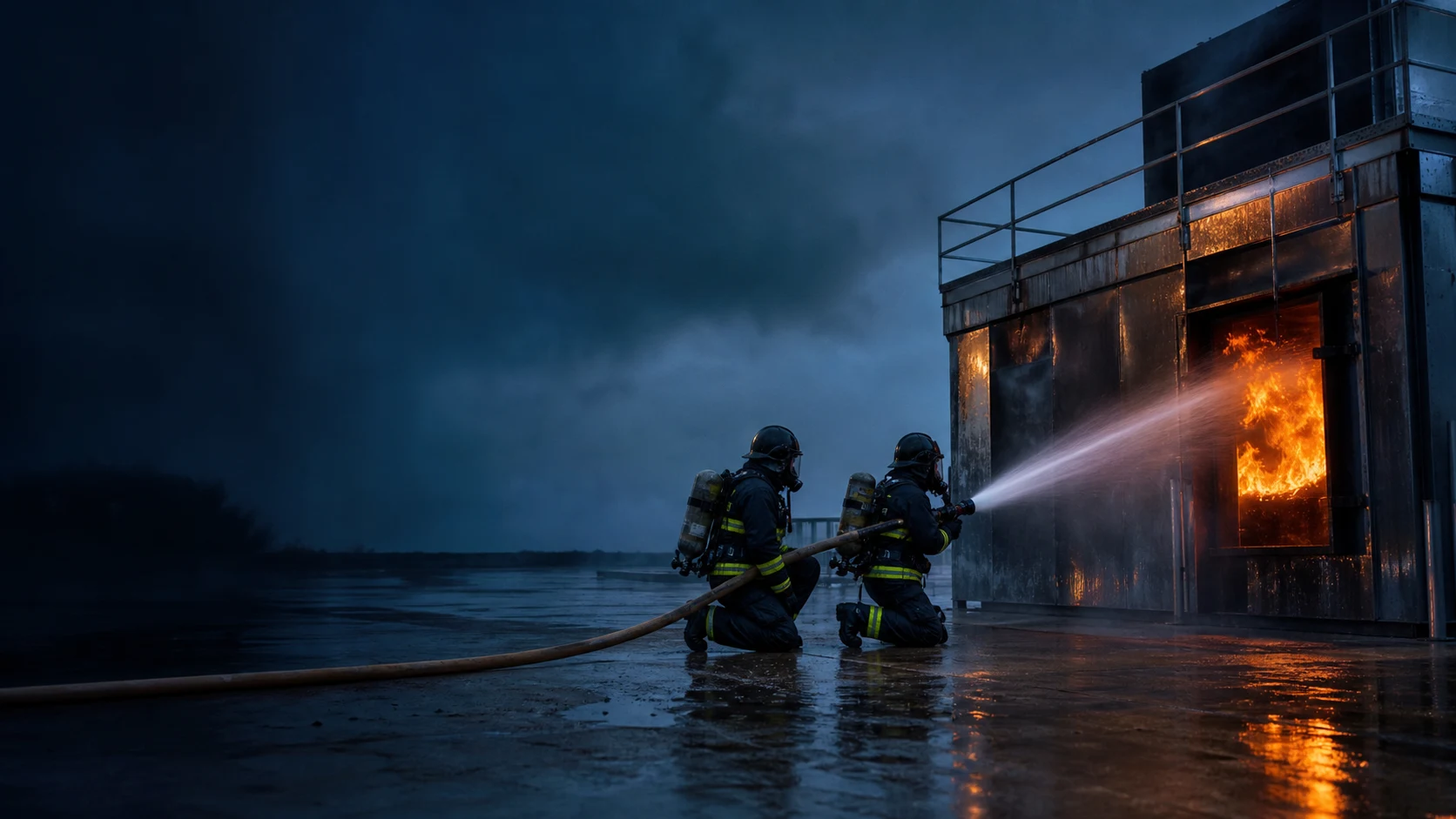
FIELD VALIDATION
Operating objective
Control the event.
Protect what follows.
Fire response is more than flame knockdown. Water demand, runoff, cleanup, equipment exposure, heat reduction and time to safe restart all shape the operational outcome.
FIELD OBJECTIVE / 04
Define the evaluation →SCT / RESPONSE OBJECTIVE01 / 04
01 / CONTROL
Make the first outcome visible.
Track extinguishment time and heat reduction against the defined response environment.
OBSERVETime to control / heat reductionRECORDApplication conditions / baseline
Working mechanism
Water + metered CO₂.
No conventional retardant added.
The development system dissolves metered CO₂ into water before application. The program is evaluating whether this controlled solution improves heat reduction, water use and reignition behaviour.
Site, runoff and incident-management requirements still apply. Environmental performance must be evaluated for each use case.H₂OWATER+CO₂METERED INPUTCONTROLLED
TRANSFERFIELDAPPLICATION
TRANSFERFIELDAPPLICATION
Wildland response envelope
Ground crews are one layer.
Access changes the next.
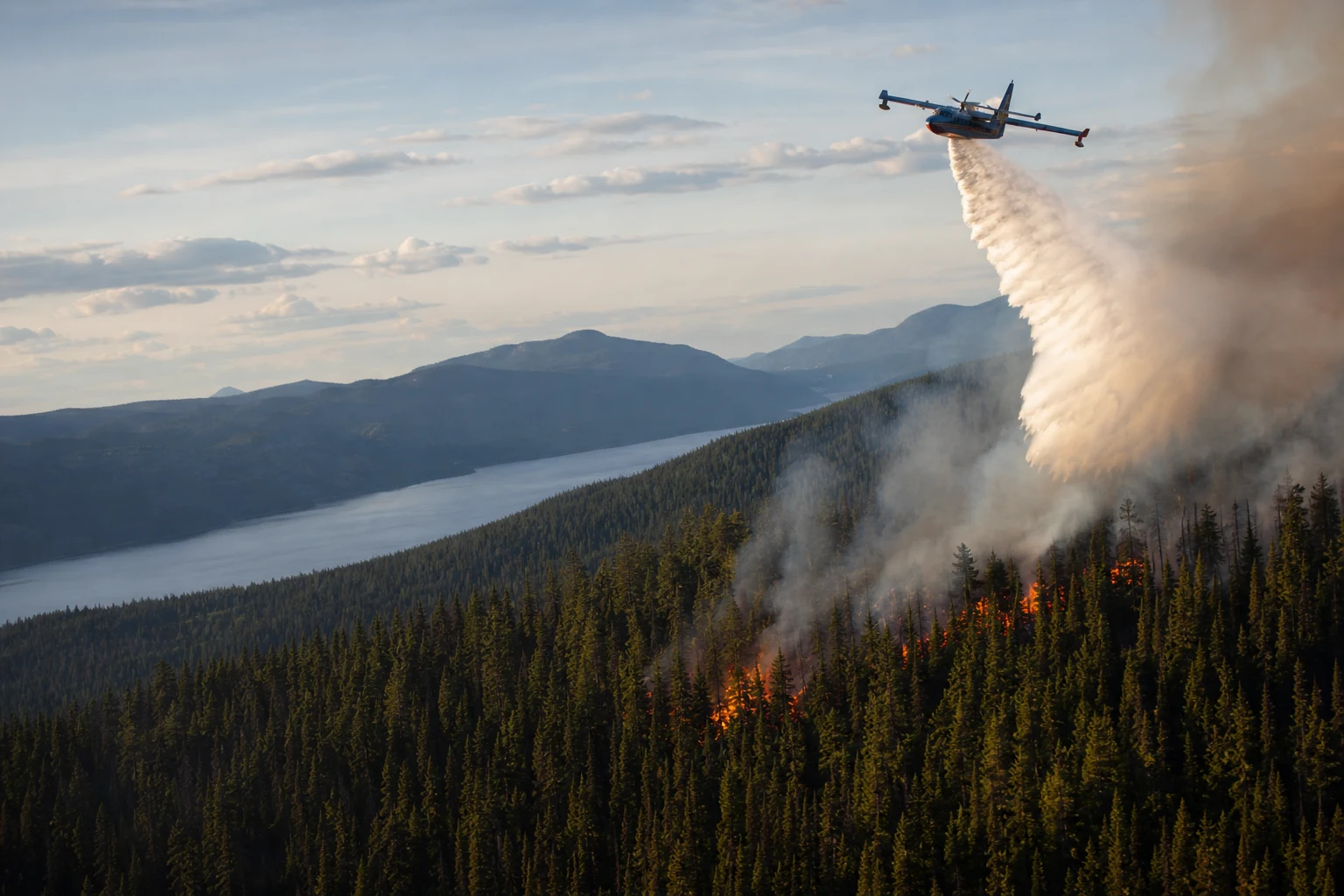
Large-area incidents introduce a different operating question: how ground teams, aerial support, water logistics and recovery decisions work together around a defined objective.
SC Technologies’ fire program remains focused on measurable response outcomes. This aerial scene is illustrative, but it shows the wider context a future evaluation partner may need to bring into the brief.
Frame a response scenario →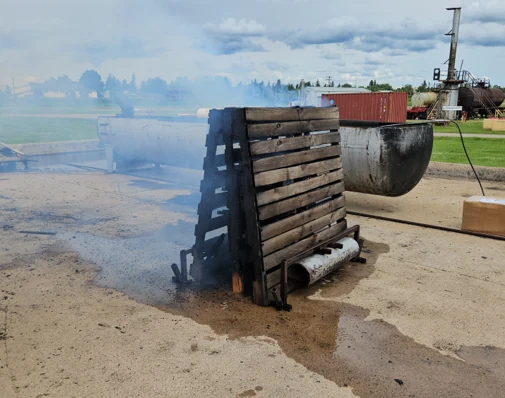
Field evaluation · June 19—July 10, 2026
Designed to compare.
Built to learn.
Small-scale work used a common rainwater base for untreated and carbonic solutions. Field-scale delivery followed with paired 200-gallon skid tanks.
The program remains preliminary. Repeatable protocols and independent participation are the next evidence gates.
Preliminary directional results
Three measures.
One operating objective.
Reported across the referenced Lakeland ETC test series. Absolute sample counts were not published in the source material available for this site.
Relative outcomes reported within the described Lakeland comparative work.
Repeatability, independent review and application-specific performance remain open evidence gates.
Field evaluation fit
Bring the scenario.
Define the proof.
A useful evaluation is built around a real response environment, a relevant comparison and a decision the evidence can support.
Defined fire environment
Fuel, structure, exposure, water supply, equipment and incident constraints.
Relevant baseline
A matched water source and current response method suitable for comparison.
Decision-grade outcomes
Control time, heat reduction, water demand, reignition and recovery conditions.
Operational participation
A qualified site, safety ownership, test oversight and a path to review the record.
GOOD FIRST CONVERSATION
Plan a field evaluation →You have a real operating challenge and can help define the evaluation environment.
Advance the work with us.
Bring us a response challenge.
Design a field evaluation.
Fire services · Emergency training centres · Industrial operators · Equipment partners